Use Cases We Didn't Design
Three times in one week, our users did something with the product we never imagined. Each instance taught us something fundamental about the difference between building a tool and building a platform.
Tag
9 articles

Three times in one week, our users did something with the product we never imagined. Each instance taught us something fundamental about the difference between building a tool and building a platform.

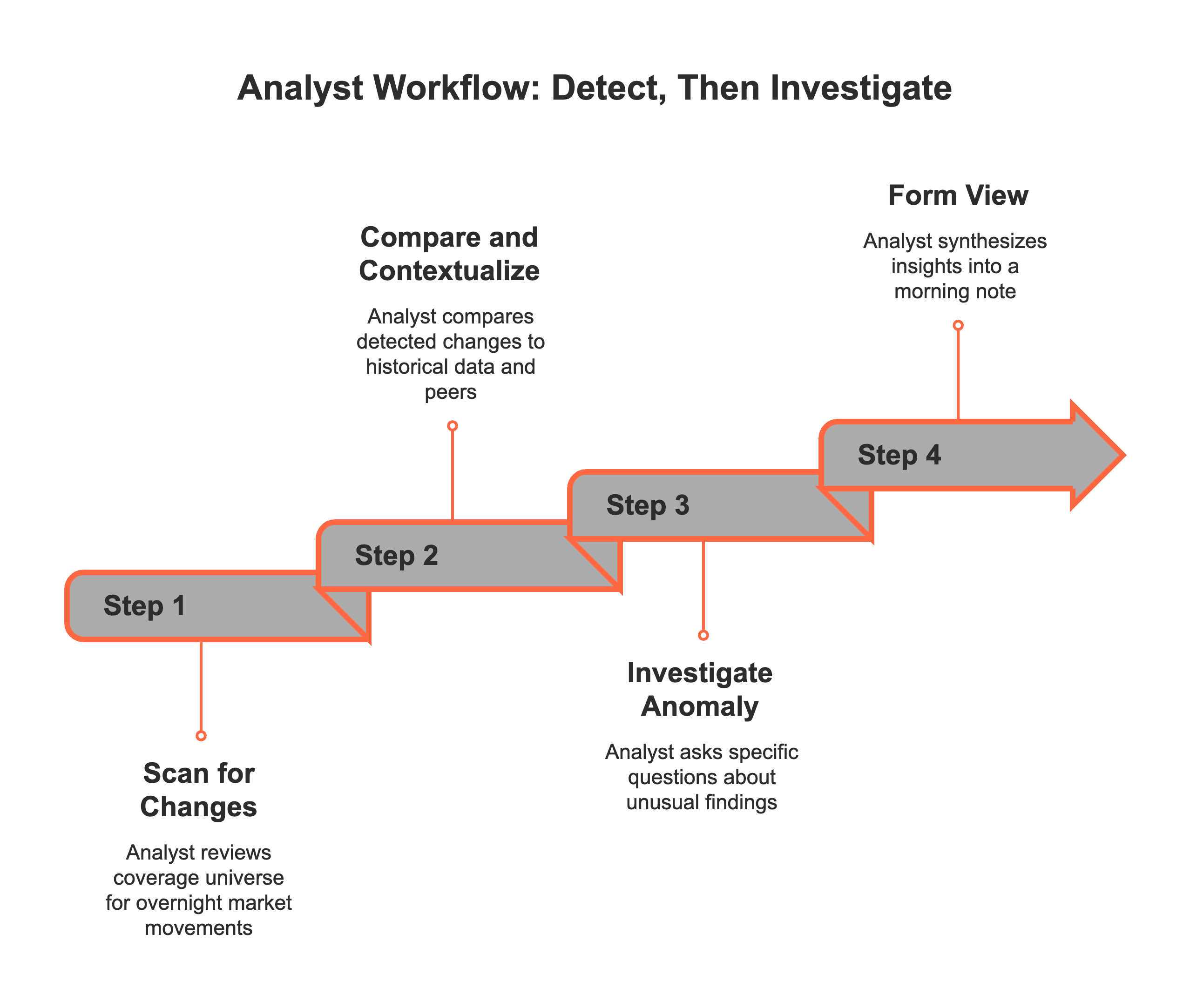
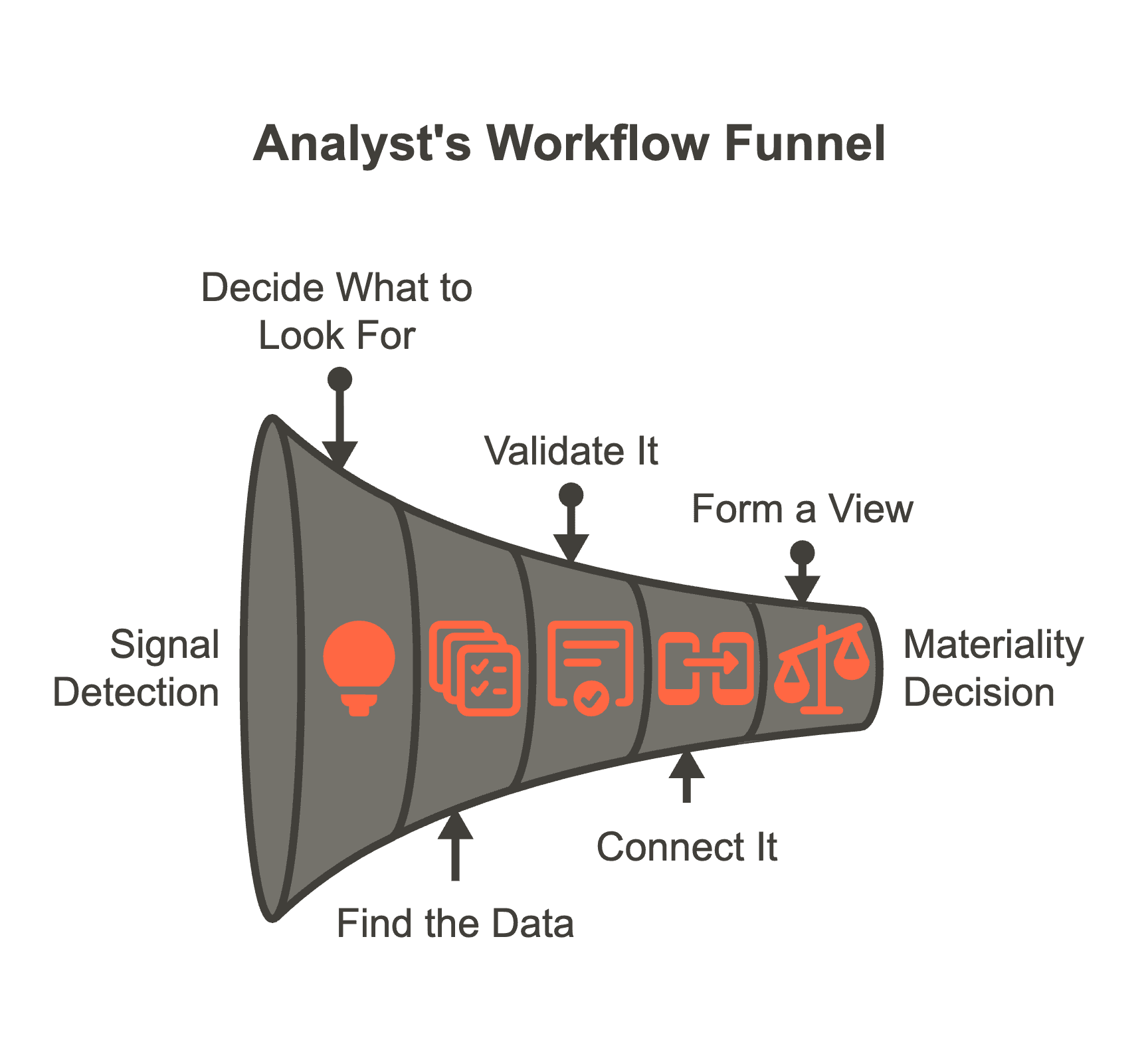
We spent three months watching analysts use our system. We built one thing. They wanted something else entirely. The lesson was simple, and it changed everything about how we build: analysts don't start their day with questions. They start with changes.

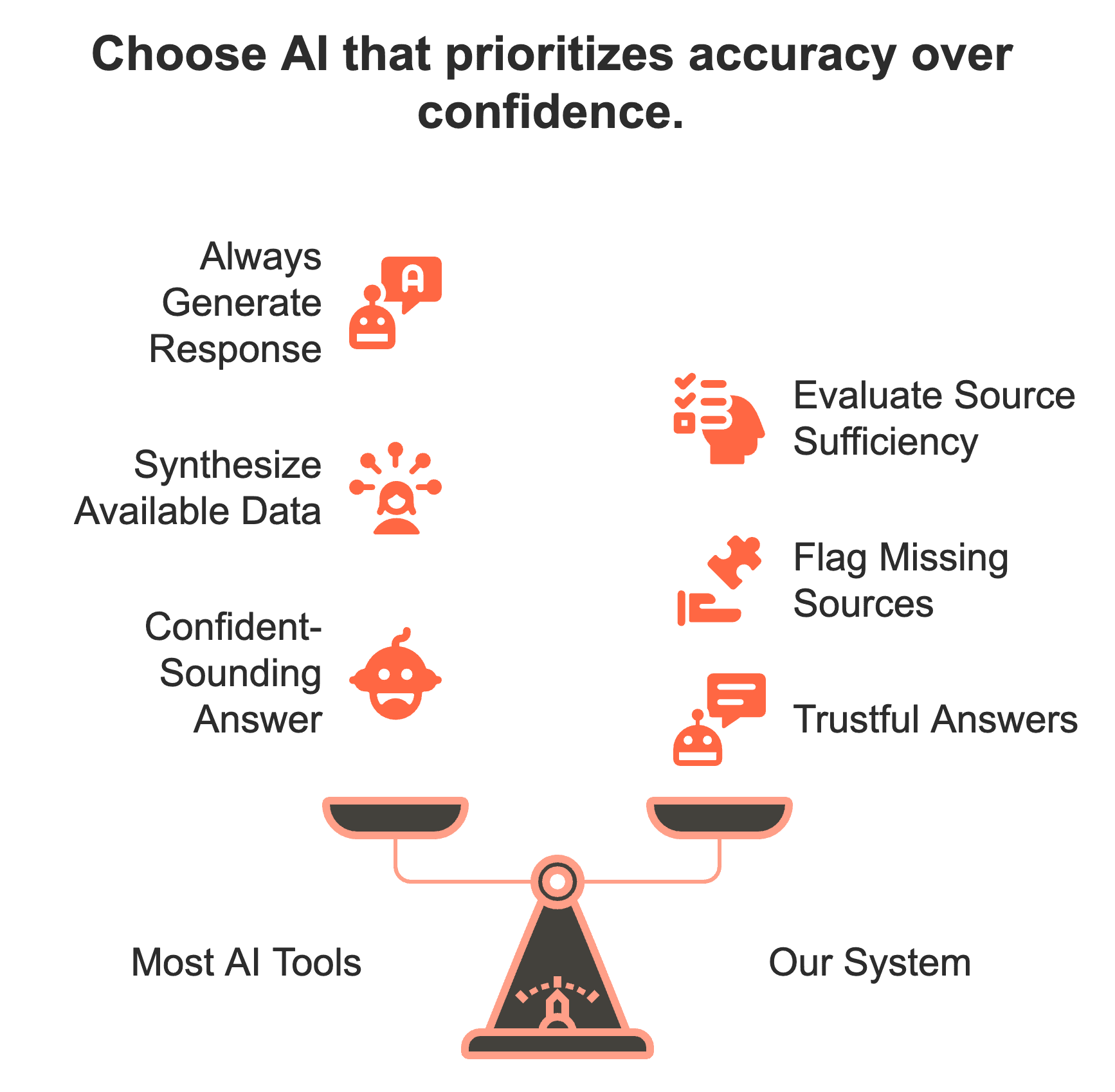
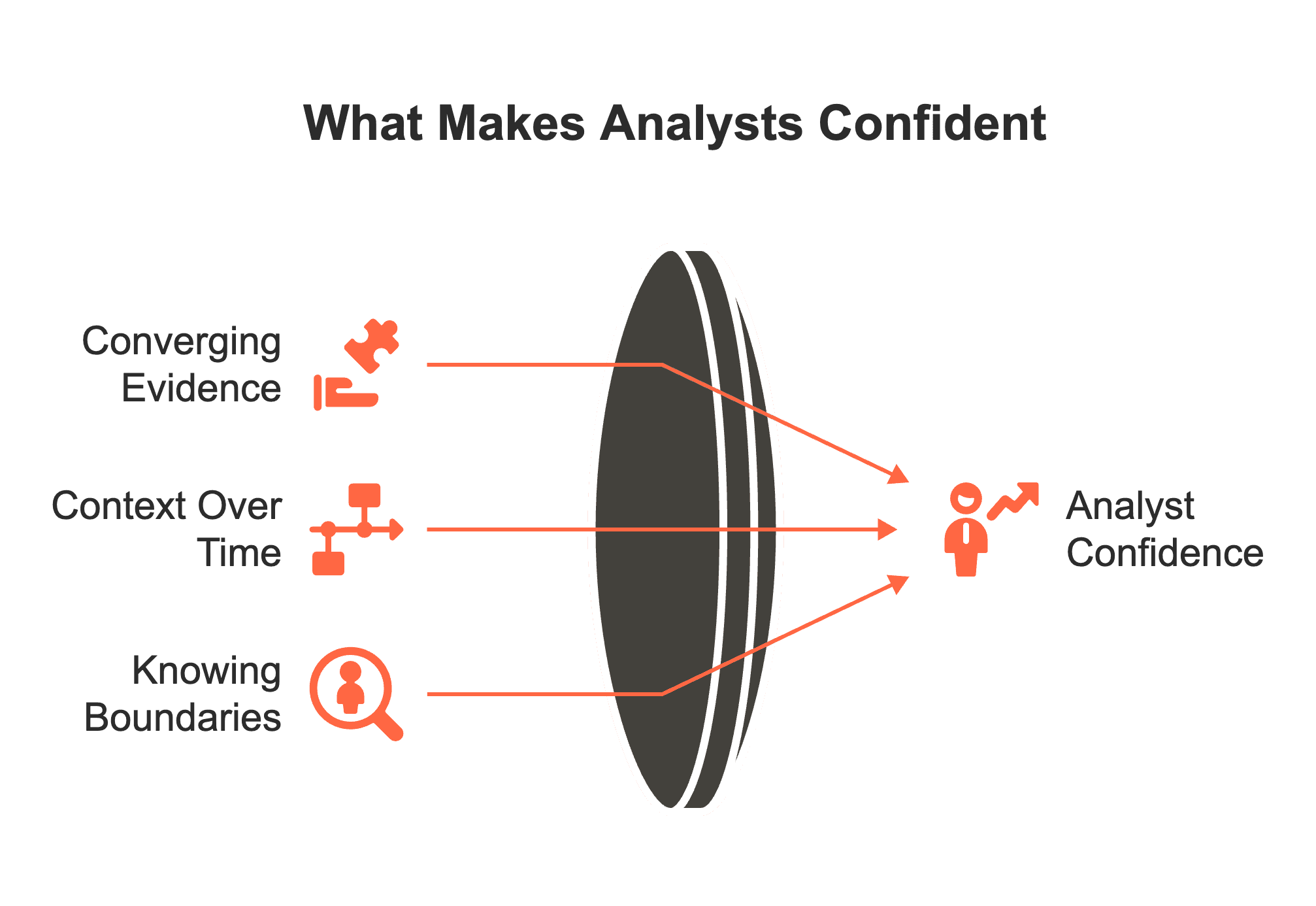
During a high-stakes demo, our system told a senior analyst it didn't have enough evidence to answer. She said: 'This is the first AI tool that's been honest with me.' Here's why building uncertainty into the product was the best decision we made.

Not a new tool. Not a new database. Not a better chatbot. An operating system. Here's exactly what that means, and why I believe it deeply enough to stake my career on it.

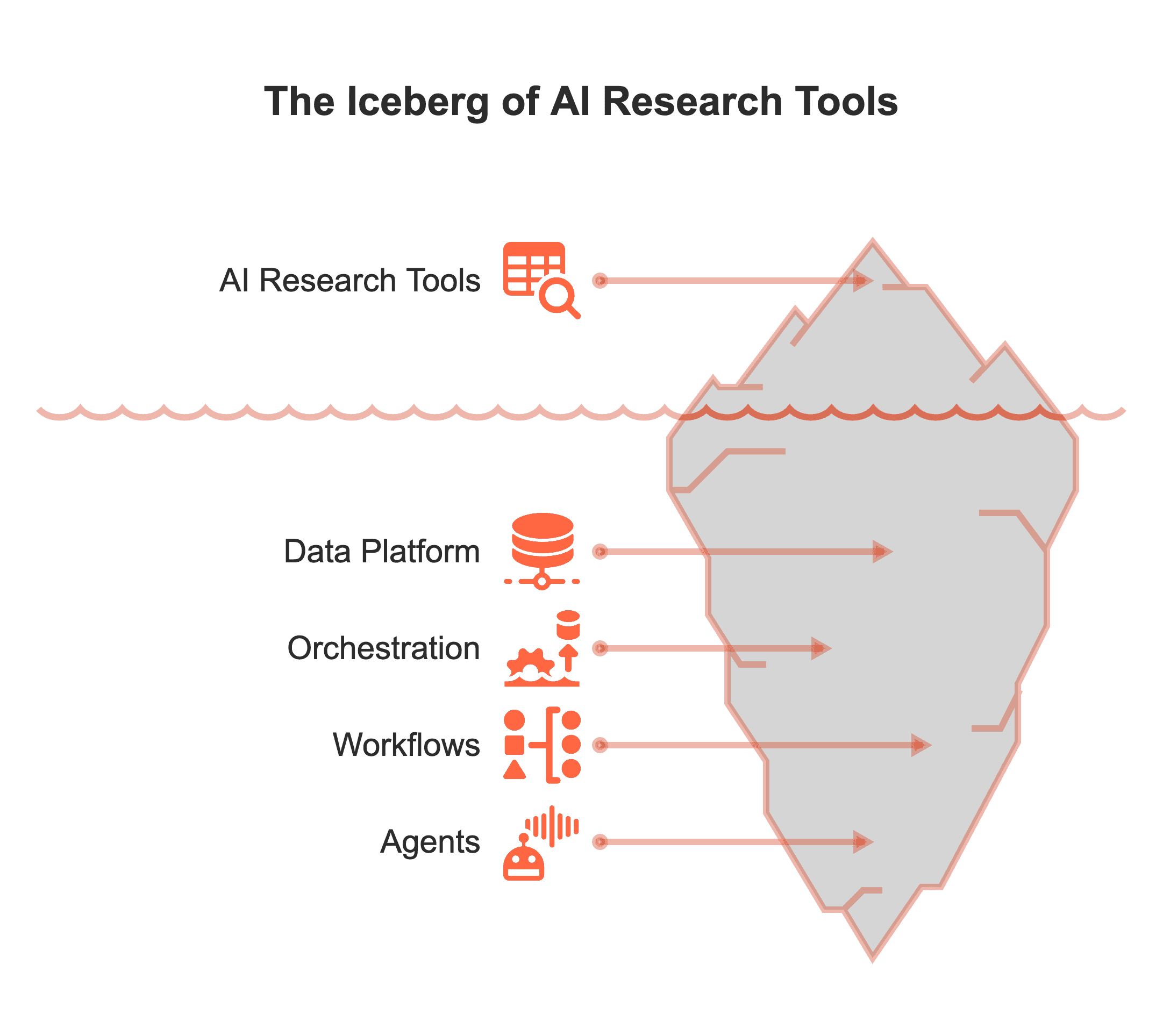
There's a wave of AI tools targeting equity research. Most share the same architecture: take an LLM, connect it to financial data, let analysts ask questions. It's a compelling demo. But it's not research infrastructure, and the distinction matters more than most people realize.

We built a dramatically improved search engine. The analyst looked at us and said, 'I don't want to search at all.' Here's what that Tuesday taught us about retrieval vs. orchestration, and why listening past the feature request matters.

A senior analyst said six words in a demo that reshaped our entire product. This is the story of how 'my job is being right' forced us to rebuild from the ground up, and what we learned about the difference between retrieval and conviction.

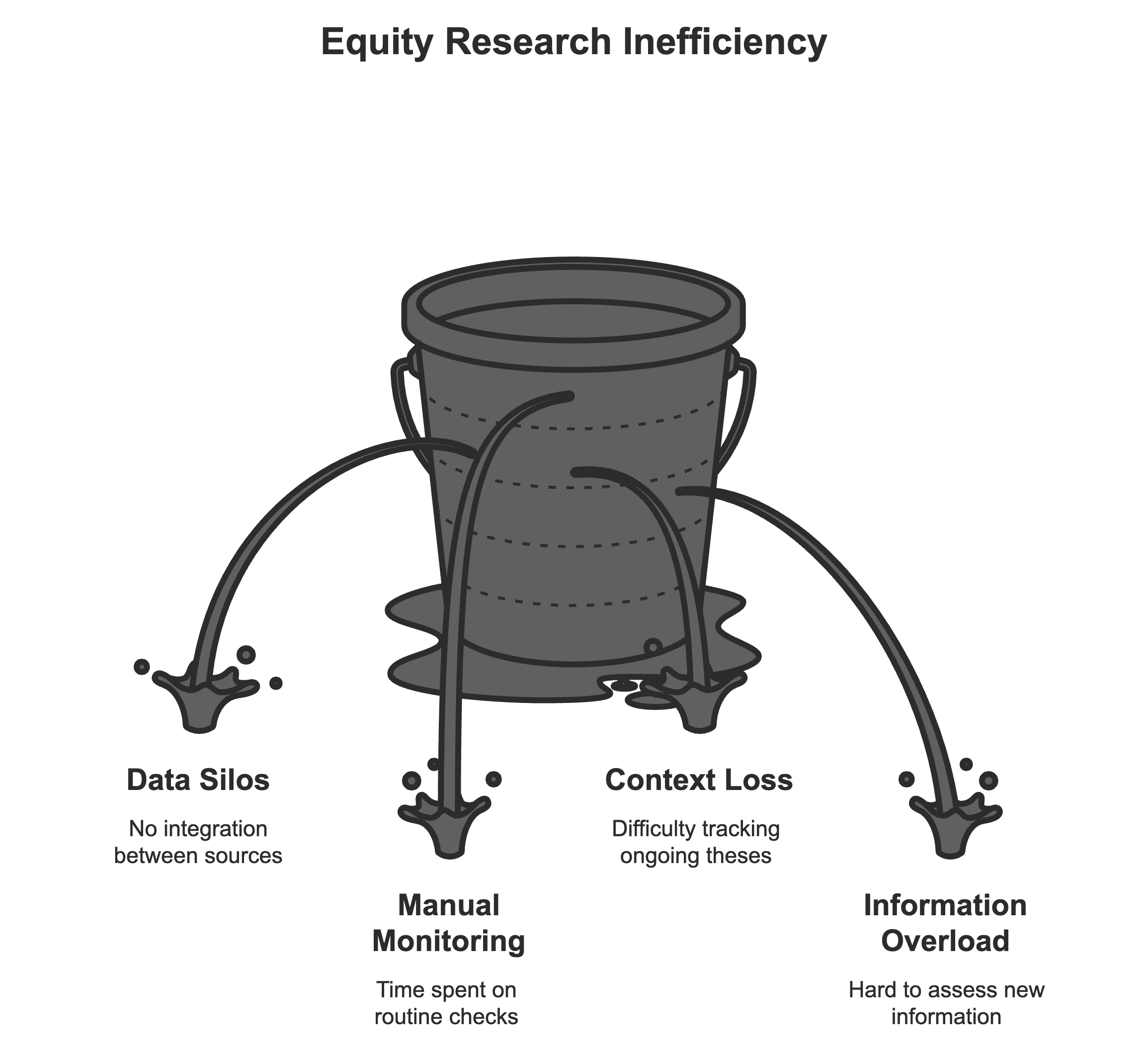
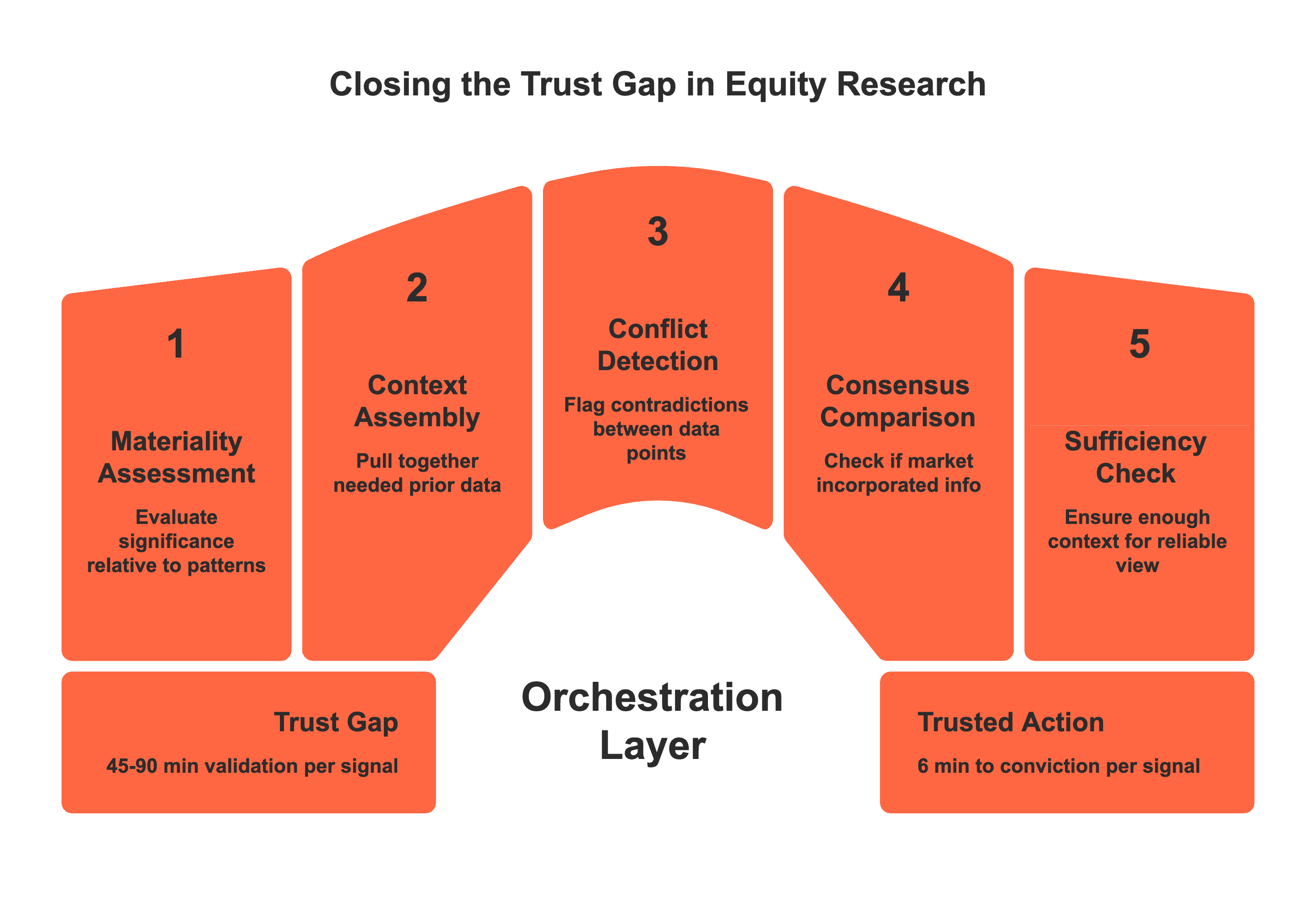
Every analyst I've observed pays a hidden cognitive overhead tax: 45 to 90 minutes of validation work between finding a signal and trusting it enough to act. This is the trust gap and most AI tools don't touch it.

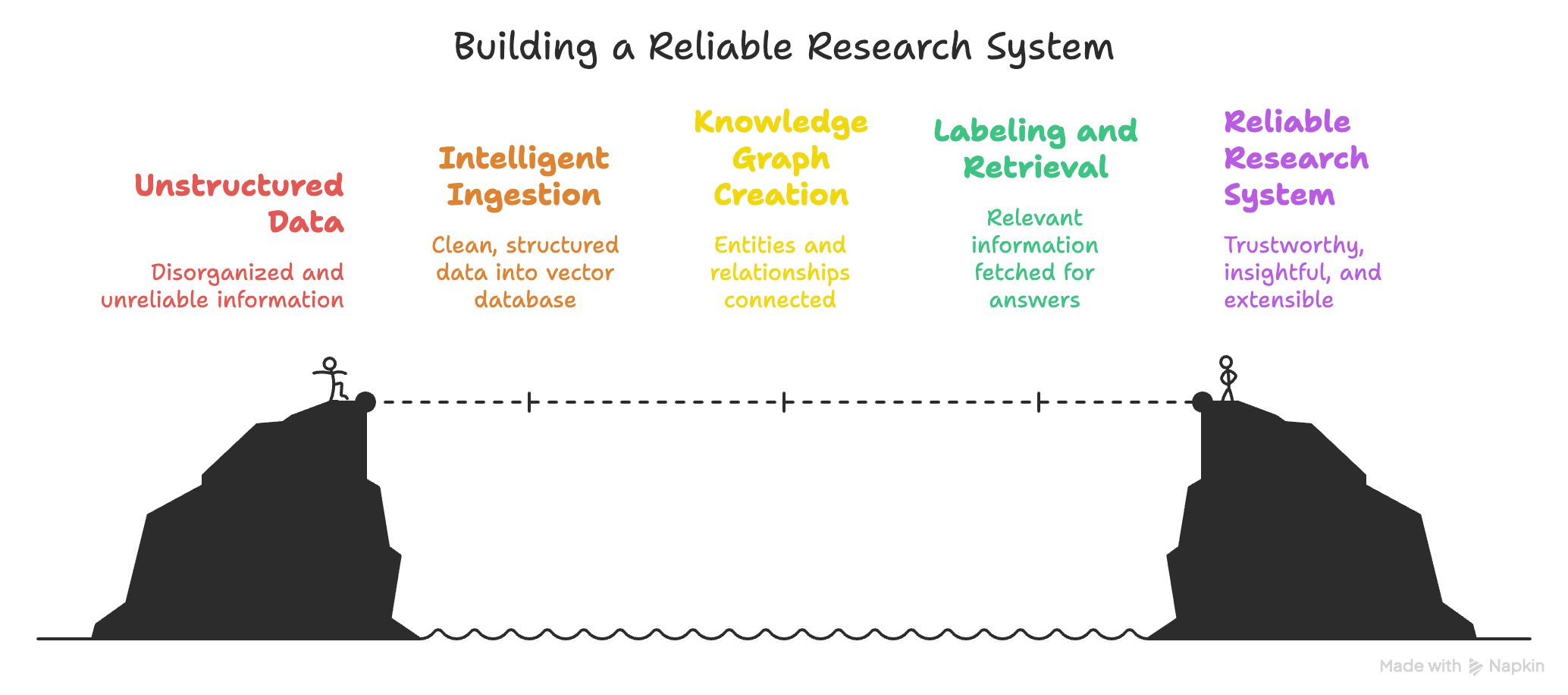
How AI is redefining how research teams think, decide, and invest. A framework for building systems where truth is foundational, relevance is orchestrated, and insight compounds.