Why I'm Betting on a New OS for Research
Not a new tool. Not a new database. Not a better chatbot. An operating system. Here's exactly what that means, and why I believe it deeply enough to stake my career on it.

TL;DR
Equity research does not need another AI tool -- it needs a new operating system that unifies data ingestion, orchestration, workflows, and agents into a single layer that compounds intelligence over time. AI models are commoditizing, but the system architecture that makes AI trustworthy for capital allocation decisions will not be, and that is where the durable competitive advantage lives.
Not a new tool. Not a new database. Not a better chatbot.
An operating system.
I realize that sounds grandiose. "Operating system" is one of those phrases founders throw around when they want to sound important. So let me explain exactly what I mean, and why I believe this deeply enough to stake my career on it.
The Insight That Started Everything
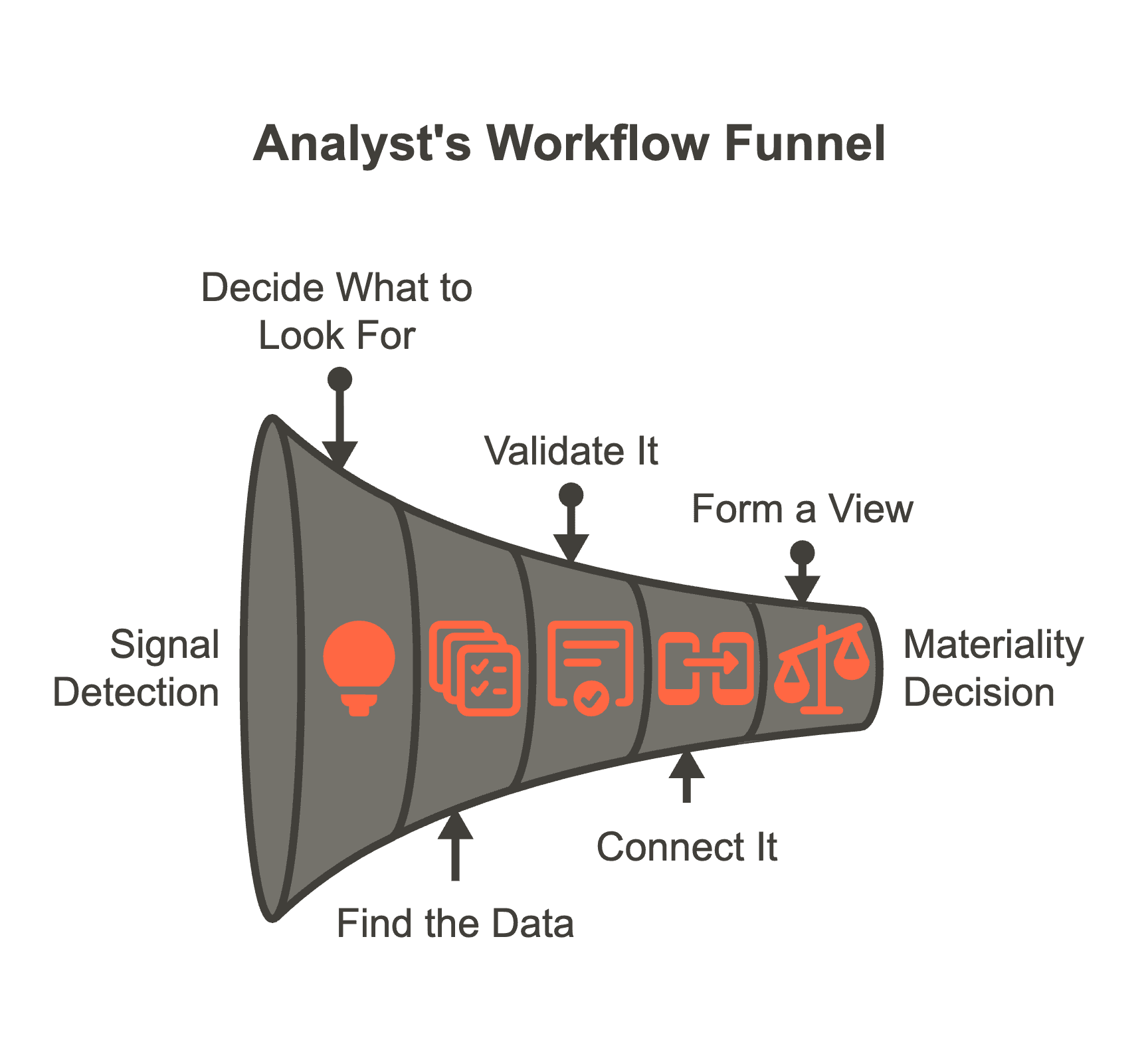
Before KnowYourCompany.ai, I spent years watching how equity research actually gets done. Not the polished output: the 40-page initiating coverage report, the model with perfectly linked tabs, the conviction rating. I mean the messy, human process behind it.
And what I saw was this: the best analysts aren't better at finding information. They're better at building conviction from ambiguous, incomplete, sometimes contradictory data. They hold multiple scenarios in their heads simultaneously. They have an intuition for which signals matter and which are noise. They know when a management team's tone shift means something and when it doesn't.
This skill, the ability to move from data to conviction, is the irreducible core of equity research. Everything else is overhead.
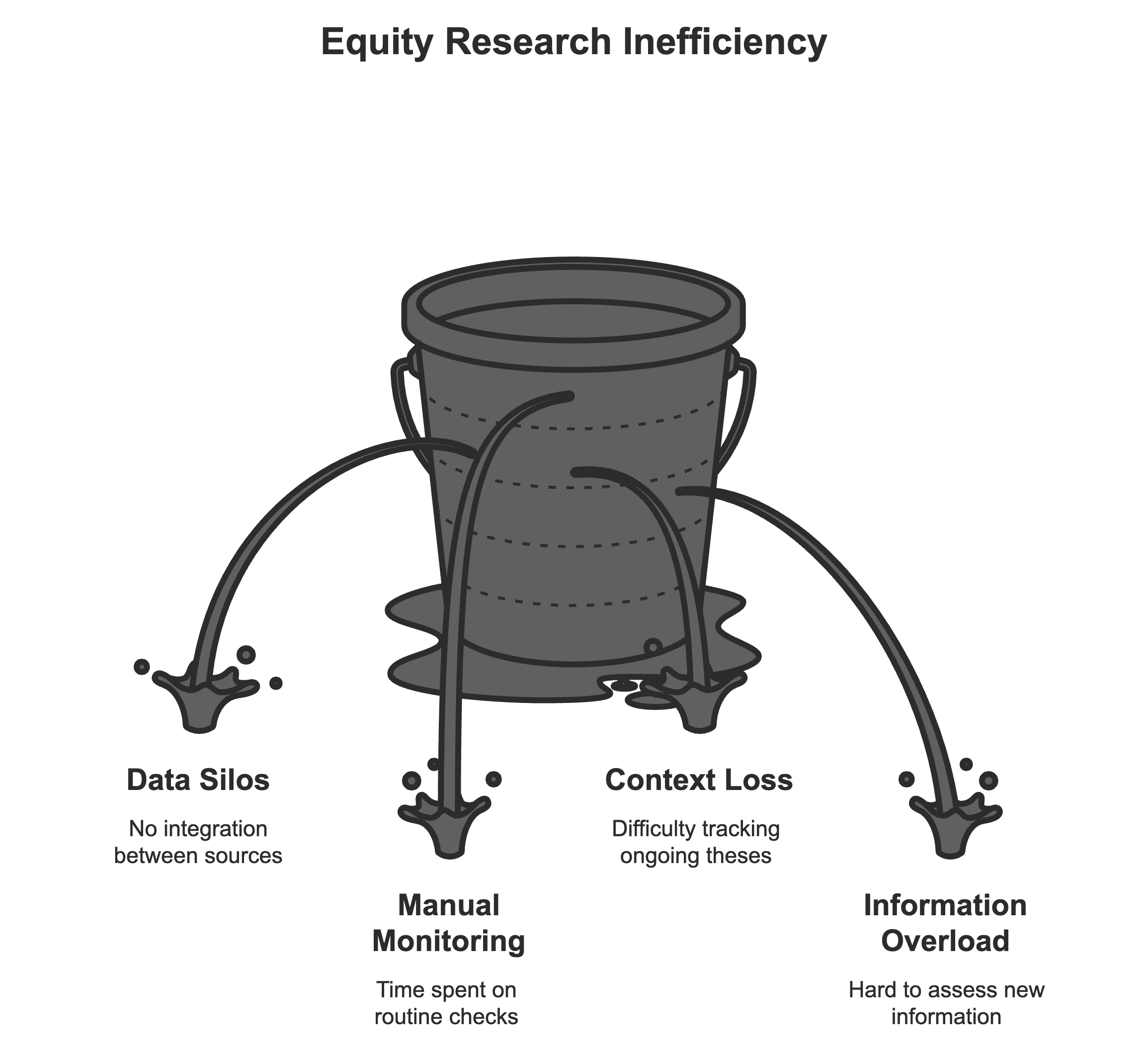
And yet, when I looked at how analysts actually spend their time, the ratio was inverted. Maybe 20% of an analyst's day is spent on the high-value work of building and testing investment theses. The other 80% is data gathering, cross-referencing, formatting, administrative work, and the cognitive overhead of keeping dozens of information streams organized.
The tools available to them, terminals, spreadsheets, document processors, email, messaging apps, are a patchwork. Each one does its job, but none of them talk to each other in a meaningful way. The analyst is the integration layer. Their brain is the orchestration engine. Their memory is the workflow system.
That's not an information problem. That's an infrastructure problem.
What I Mean by "Operating System"
When I say equity research needs a new operating system, I mean this: the industry needs a unified layer that sits beneath all the individual tools and tasks and connects them into a coherent analytical system.
Think about what an operating system does for a computer. You don't interact with memory addresses and CPU instructions directly. The OS abstracts that complexity, manages resources, coordinates processes, and gives you a coherent interface to build on top of.
Equity research needs the same thing. A layer that ingests and normalizes data from every source. That monitors the analyst's coverage universe and surfaces material changes automatically. That maintains the context of ongoing theses and tracks how new information affects existing conclusions. That enables AI agents to operate, but within guardrails that ensure trustworthiness.
No single tool does this today. Bloomberg gives you data access. Excel gives you modeling. Your email gives you communication. Your notes app gives you notes. But nothing ties the analytical process together into a system that compounds intelligence over time.
Every analyst I know has a personal Rube Goldberg machine, a cobbled-together stack of terminal shortcuts, spreadsheet macros, email folders, and mental models, that they've built over years. It works. But it doesn't scale, it doesn't transfer, and it breaks every time someone leaves or joins a team.
The Bet
Here's the bet I'm making: the next era of equity research won't be defined by who has the best AI model. It will be defined by who has the best system for turning data into decisions.
AI models are commoditizing. GPT-4, Claude, Gemini: they're all remarkably capable, and the gap between them is narrowing with every release. Within a few years, the underlying language model will be a utility, like electricity. Powerful, essential, and undifferentiated.
What won't be commoditized is the system architecture: the orchestration, the workflows, the domain-specific guardrails, and the institutional knowledge that makes an AI research system trustworthy in high-stakes environments.
This is where I believe the durable competitive advantage lives. Not in the AI itself, but in the infrastructure that makes AI useful for decisions that move capital.
Why It Has to Be a New System
I sometimes get asked why an existing company, a Bloomberg, a FactSet, a Capitaline, can't just add AI to their platform and solve this.
They can, and they will. But adding AI to a platform built around terminals and search interfaces is like adding a turbocharger to a horse-drawn carriage. The speed improves, but the fundamental architecture is wrong.
These platforms were designed for a world where the analyst is the integration layer. Their information architecture assumes you'll go looking for data. Their workflow model assumes you'll do the synthesis yourself. Their output model assumes you'll write the report manually.
Bolting an AI chatbot onto this architecture gives you a faster way to do the old workflow. But it doesn't give you a new workflow, one where the system does the monitoring, orchestration, and synthesis, and the analyst focuses on the irreducible human work of building conviction and making judgment calls.
That requires starting from a different foundation. An architecture that's event-driven rather than query-driven. That maintains analytical state over time. That compounds insights across a coverage universe rather than answering questions one at a time.
Where We Are Today
We're still early. KnowYourCompany.ai is not the finished product I see in my head; we're maybe 30% of the way there. But the early signals are encouraging.
The analysts using our system are spending less time searching and more time thinking. They're catching thesis-relevant signals faster. They're building conviction from a wider base of evidence because the system surfaces connections they wouldn't have found manually.
And here's the thing that gives me the most confidence: they're using it in ways we didn't design for. When you build infrastructure instead of a tool, users find applications you couldn't have imagined. That's the clearest sign you're building at the right layer of abstraction.
I don't know if KnowYourCompany.ai becomes the operating system for equity research. What I do know is that this operating system needs to exist. The current infrastructure is a 30-year-old patchwork that was never designed for the age of AI. And the analysts who get access to a modern research system first will have a compounding advantage over those who don't.
That's the bet. And in this market, I like the odds.
Other posts in the Founder Stories series:
- We Spent 3 Months Building the Wrong Feature, lessons from an early product pivot
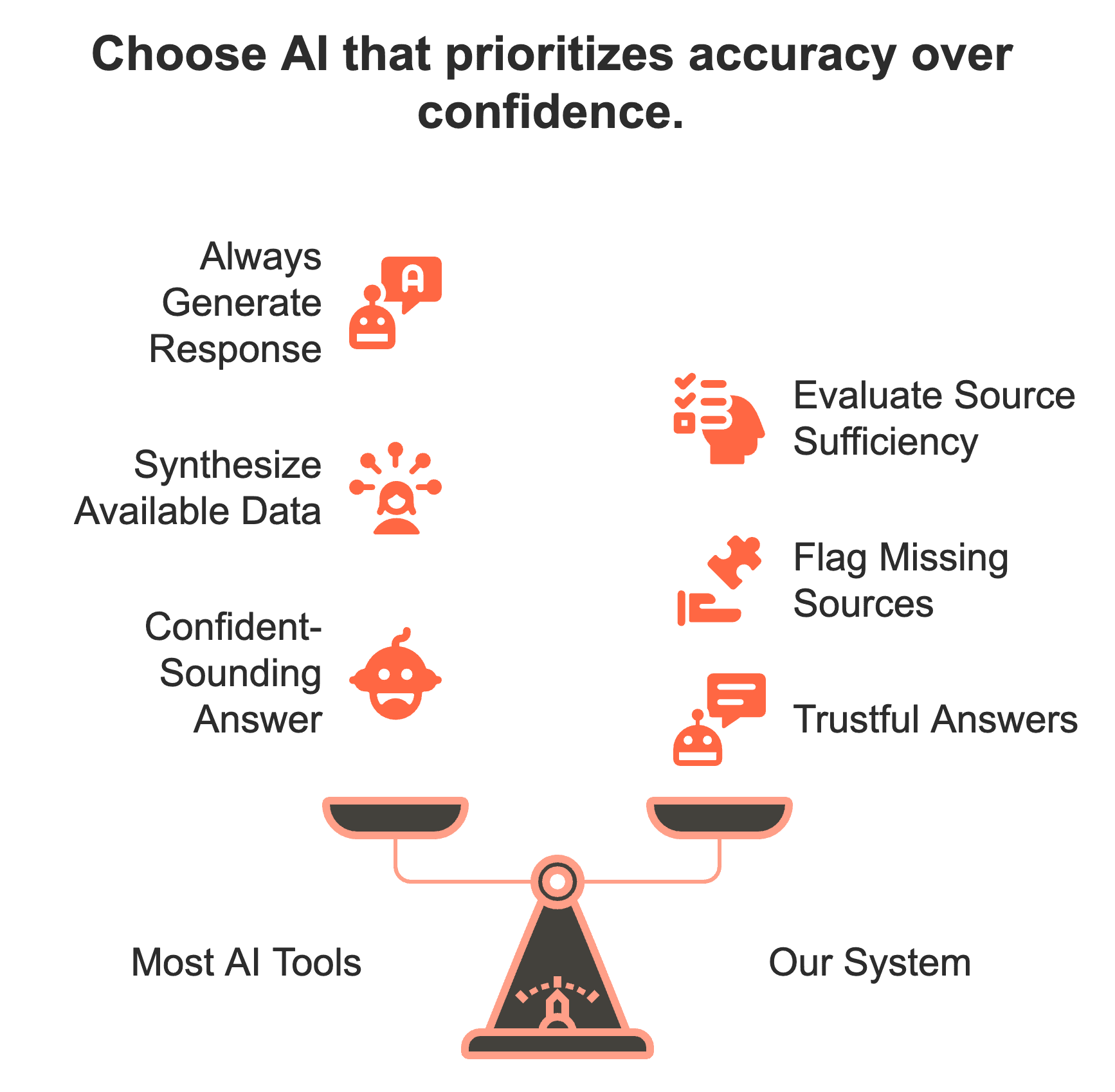
- We Taught Our AI to Say "I Don't Know", why we built honesty as a core feature
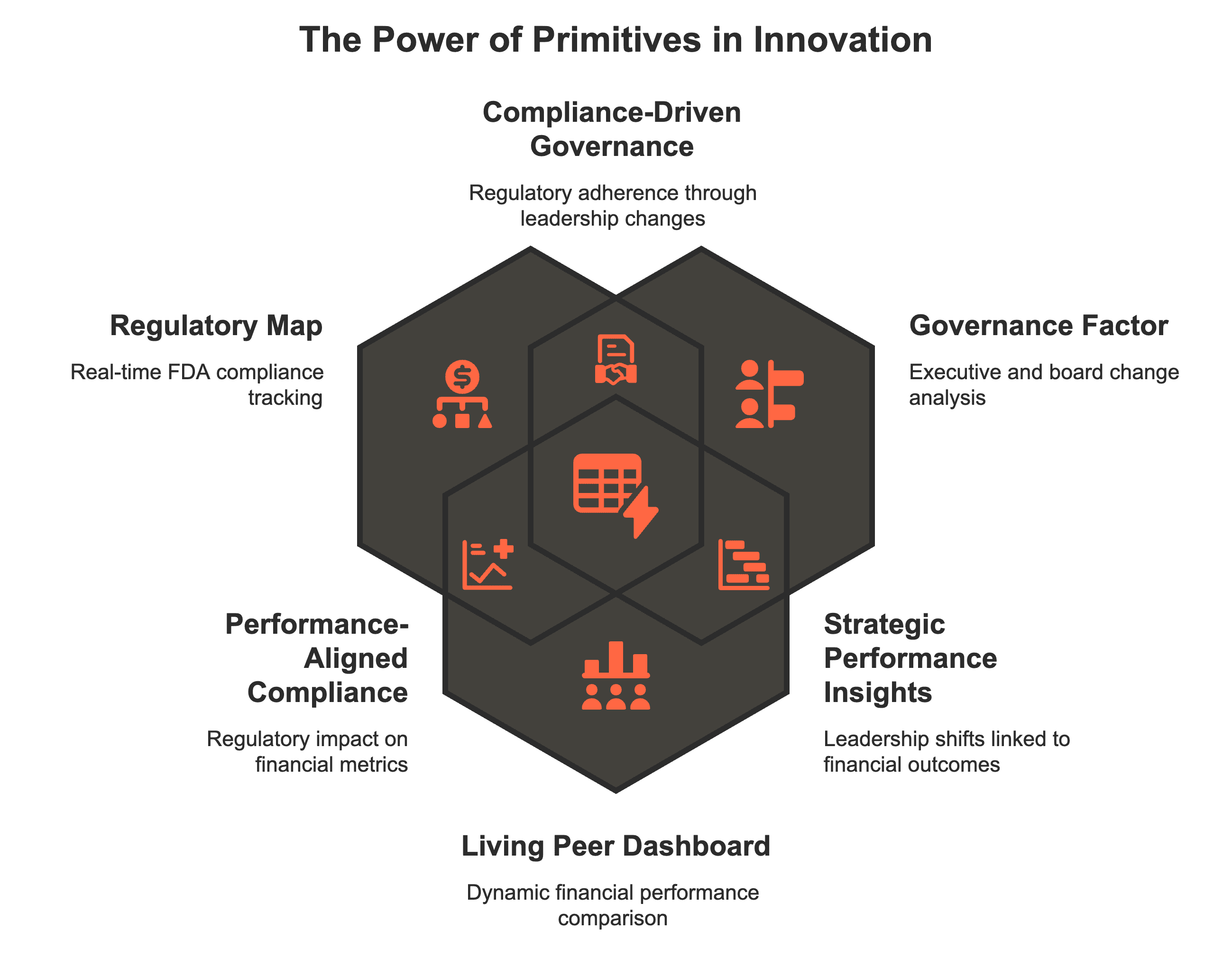
- Our Users Found Use Cases We Didn't Design, what happens when you build primitives
Enjoyed this article?
Get more insights like this delivered to your inbox weekly.